
To see the breed standard for the Beagle (copyright of the Kennel Club), please click HERE.
The Beagle is one of the smaller of the hound breeds though still classed as a medium sized dog. They should stand between 13-16 inches high at the shoulder and and are renowned for having a merry and outgoing temperament with them being in general highly sociable dogs that thrive on company.
The breed originated in the UK and in fact miniature Beagle ‘type’ dogs were used for hunting hare and foxes in the times of Edward II and Henry VII and with Queen Elizabeth I being known for having a pack of ‘pocket beagles’ (this strain of the breed now not in existence). Lots of detail on this side of the history of the beagle can be seen here on the Southern Counties Beagle Club website.
To this day there are still some varieties of Beagle whereby they are more ‘traditional’ hunting/pack stock as opposed to the show type beagle although their histories are very entwined. Nowadays these are more likely to be ones where the Beagle has been outcrossed with other hound breeds such as the Harrier and Foxhound which creates a very similar looking dog albeit usually leggier and lighter of bone,
The Kennel Club registered show Beagle came into its own after WWII and by the 1950’s they were fully recognised under the KC as show dogs with a compliment of Challenge Certificates on offer for the breed. Several key breeders/kennels at this point became prominent and to this day remain of historic significance by forming the foundations of the breed as we know it today. Amongst these were my aunt, Joan Whitton (Tavernmews) and many others, the details of which you can see on the link to the SC Beagle Club website above.
Over the coming years several kennel names started to rise to the fore and indeed can be seen to the present day throughout the breed. Some of these great kennels include Barvae, Appeline, Rozavel, Dialynne, Rossut, Crestamere, Korwin and many many more. Together they contributed to the improvement of the breed to give us the Beagle we see today.
Beagle’s tend to dislike being alone and thrive on companionship, whether that is in the form of humans, other dogs or even cats. If kept alone for long periods you will generally find that they can end up exhibiting unwanted behaviours such as howling and chewing/destroying things as coping mechanisms for being alone. A pack hound by nature they do love being part of a family and as such make great family dogs. It is worth noting that children must be taught to respect dogs and not treat them as toys, with their playtime with dogs being always supervised.

Being scent hounds, Beagle’s are incredibly food oriented…and greedy…and can be prone to putting on weight easily. This in mind, their food intake must be strictly controlled to ensure they maintain the correct weight. We recommend weighing all meals and then supplementing or bulking them out with healthy fruit and vegetable treats like carrots, apples, sweet peppers and in general any other which is safe for dogs to eat. Additionally we also recommend feeding them in a slow feeder bowl to encourage them to chew and not bolt their food. The great thing about being food obsessed though is that it helps in training!
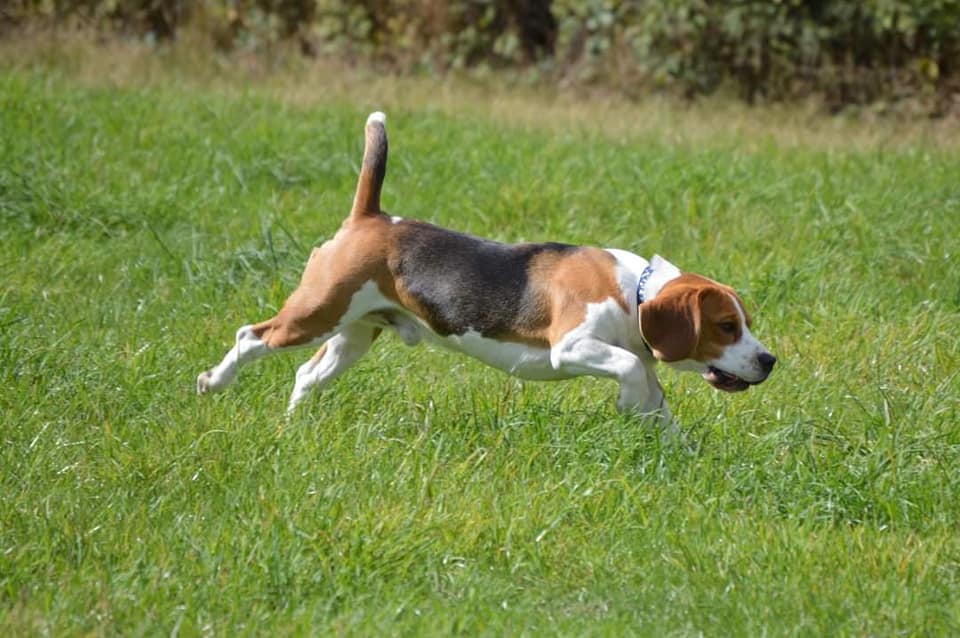
Beagles as a rule are healthy, active dogs and do require decent daily exercise ranging from 45mins to 2 hrs a day dependent on your dog and the type of exercise. They are not always the easiest dog to train to be off lead as they will follow their nose after a scent and completely block out your calls.
This in mind then we do advise that if owner’s intend their dog to be off lead that they spend a good amount of time ensuring good recall training is instilled or potentially also ensuring their dogs wear a tracker on their collar to aid in finding them should they go wandering. Failing this then we would advise that they are only allowed off the lead when in a secure area. At home also we recommend that the garden is secure, with high fences, as they are sometimes known to be escape artists.
Rules and boundaries are important when raising and teaching a Beagle. They are quite strong willed – indeed human like in being opinionated – and therefore it is important that training is instilled in puppies as soon as possible. They are highly intelligent and as such not only catch on to new things quickly but are also just as quick in figuring out if they can get away with something. We always recommend crate training with a beagle (at least when they are young) as it not only gives them their own safe space and somewhere you can leave them safely when you go out, but also means that should you need a ‘time out’ or even somewhere to recover from injury, that it is a happy and safe space for them.
As important as physical exercise is to a Beagle, we would also say mental exercise is just as if not more important. They love learning new tricks and so providing toys that can help keep their brain active as well as training them is an invaluable tool. Never also underestimate the stimulating and tiring power of a good ‘sniffing’ session when out walking. Being scent hounds, you will find they walk almost everywhere with their noses to the floor or simply scenting everything. In doing this they are working their brains as they filter information and so simply taking them for a good walk to allow them to sniff, whilst not necessarily physically tiring, will have a calming and relaxing effect on their brain.
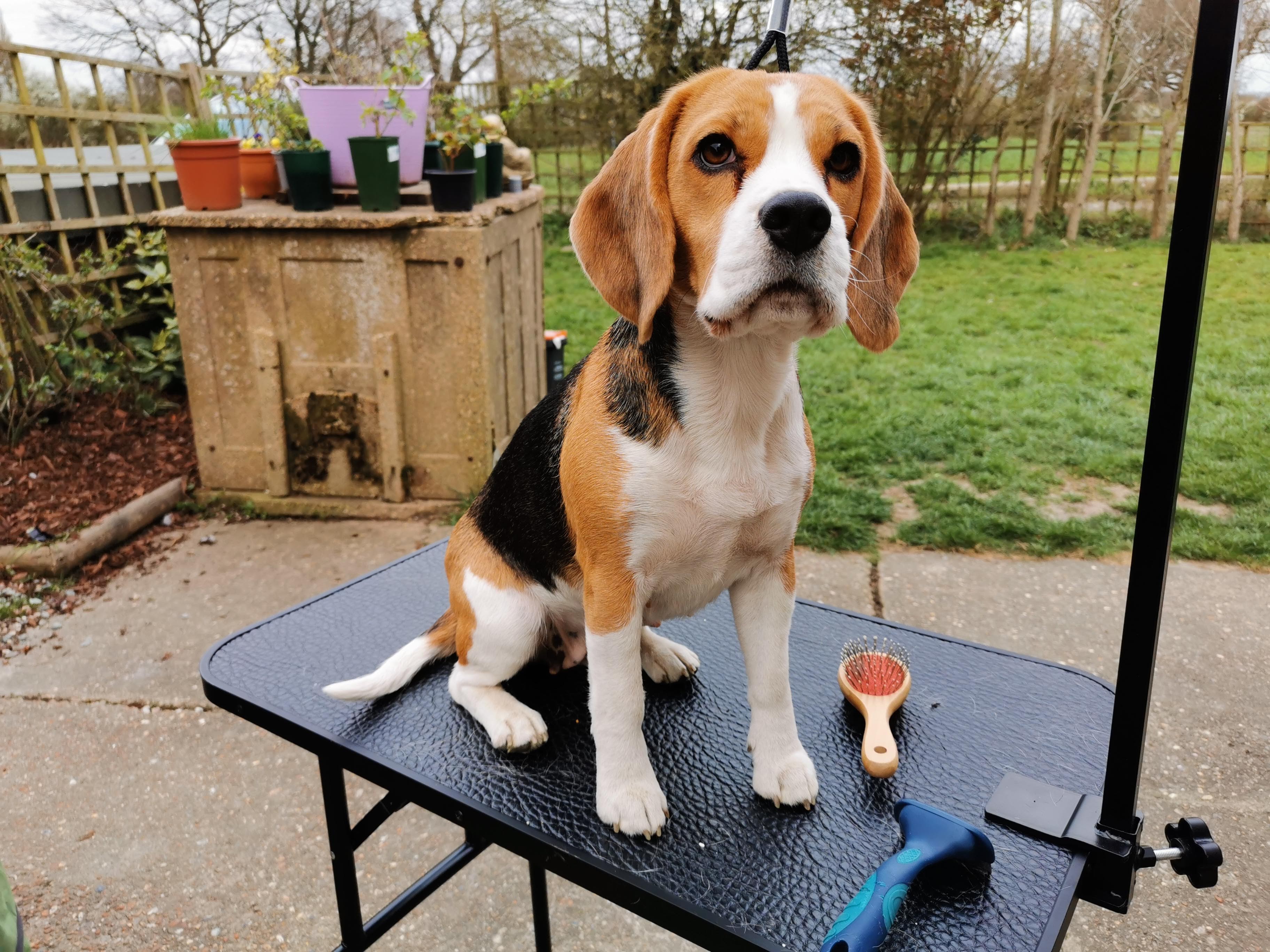
Beagle’s don’t require tonnes of grooming as with some other breeds however when they moult…they moult! As such a good groom with a fine comb or slicker brush will help keep this unwanted hair under control. You can bathe your beagle as and when needed but be careful to ensure they do not get cold when drying. Check once a week that your Beagle’s ears are clean and also teach them to have their teeth brushed regularly.
There are a few medical conditions associated with Beagle’s, some of which can be tested for through their DNA. So always ensure when buying a puppy that the parents have been tested as this will ensure that the puppy is healthy and clear. The conditions tested for are Musladin-Leuke Syndrome (MLS), NCCD, Factor VII, IGS and Lafora. Beagles can also be prone to developing Steroid Responsive Meningitis (referred to as Beagle Pain Syndrome) and so please ensure you do your homework on the family history of your prospective puppy/dog. Please see www.beaglehealth.info for up to date information on health conditions known to the Beagle.
Over and above all of this, your Beagle will become a family member for hopefully many many years to come. So enjoy!
 Haggatty Beagles